Mastering Swiss Chard: How to Plant, Maintain, and Harvest This Nutrient-Dense Leafy Green
Among cool-season garden crops, Swiss chard (Beta vulgaris var. cicla) remains one of the most versatile yet frequently overlooked vegetables. While greens such as kale and spinach dominate produce aisles and health trends, chard delivers a comparable nutritional profile with distinct aesthetic and horticultural advantages. According to Lee Jones, a vegetable farmer at The Chef’s Garden in Huron, Ohio, Swiss chard provides a robust supply of vitamins A, B, C, E, and K, alongside a broad spectrum of essential minerals. Furthermore, the vibrant stems that characterize many cultivars supply additional beneficial antioxidants, making the plant as nutritious as it is visual on the plate.
Beyond its nutrient density, Swiss chard appeals to home gardeners because of its rapid germination, low maintenance requirements, and reliable yield. The plant handles temperature fluctuations remarkably well, tolerating early spring chills, midsummer warmth, and late-autumn frosts. Whether incorporated into edible landscapes, raised beds, or patio containers, chard offers an easy entry point for beginner gardeners while yielding a continuous supply of tender leaves for fresh salads, stir-fries, soups, and bakes.
Understanding Swiss Chard Growth Habits and Culinary Traits
Although culinary applications for Swiss chard mirror those of spinach or kale, its botanical origin sets it apart from standard greens. Kate Schneider, founder and CEO of Ibis Coastal Landscapes in Savannah, Georgia, notes that chard is not a true lettuce. Instead, it is a close relative of the beet bred specifically for its broad leaves and fleshy stalks rather than an edible taproot. This distinction influences both its texture and flavor profile. The leaves exhibit a crinkled texture similar to spinach and kale, while the stems deliver a mild, sweet flavor often compared to artichokes.
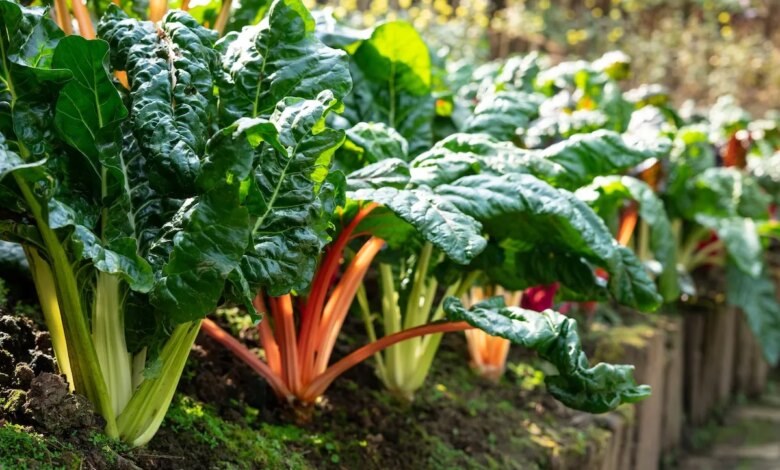
This dual texture makes the crop useful across multiple cooking applications. Tender young leaves can be harvested early for raw salad mixes, while larger, fully matured leaves hold up well when sautéed, braised, or stirred into soups and stews. Beyond its utility in the kitchen, chard carries significant aesthetic value. Modern cultivars showcase ribs and stems in bright shades of crimson, pink, yellow, orange, and ivory.
Lindsey Boney, a produce expert at Windmill Farms Market in San Diego, California, points out that these vivid colors make chard an ideal selection for dual-purpose gardening, where food production is integrated directly into decorative flower beds or landscape design. Historical accounts even suggest that chard was cultivated for its visual appeal as far back as the ancient Hanging Gardens of Babylon.
Selecting a Cultivar for Your Garden
Choosing the right Swiss chard variety primarily comes down to visual preference and intended culinary use, as basic flavor profiles remain relatively consistent across varieties. Gardeners seeking bright ornamental colors often select mixed varieties, whereas those focused strictly on high leaf volume or space-saving containers may prefer specific classic heirlooms or compact cultivars.
| Cultivar | Stalk & Leaf Appearance | Key Growing & Harvest Traits |
|---|---|---|
| Bright Lights | Vivid stalks in red, pink, yellow, and white | Award-winning variety; mild, sweet flavor; excellent for beginners |
| Five Color Silverbeet | Heirloom mix featuring orange, yellow, pink, white, and red stalks | Rapid growth; capable of producing baby greens in as few as 20 days |
| Fordhook Giant | Thick white stalks with heavily crinkled, dark green leaves | Vigorous 20th-century heirloom offering high yields and broad leaves |
| Orange Fantasia | Vivid pumpkin-orange stems and leaf veins | Provides rich autumn color; suitable for baby greens or mature cooking leaves |
| Perpetual | Smooth, dark green leaves resembling spinach | Old European variety that continues producing leaves over many months |
| Rhubarb | Deep crimson stems paired with dark green foliage | Prized for striking visual contrast in landscapes and gardens |
| Silverado | Glossy green leaves with broad white stems | Compact habit engineered specifically for raised beds and patio containers |
While varieties like Fordhook Giant and Perpetual prioritize leaf production, options such as Bright Lights or Rhubarb bring distinct color contrasts to kitchen gardens. Smaller footprint options like Silverado allow gardeners with limited space to cultivate healthy plants without crowding neighboring foliage.
Planting Requirements and Soil Preparation
Swiss chard is officially classified as a biennial plant, but it is routinely grown as an annual crop across USDA Hardiness Zones 2 through 11. It thrives during the cool weather of spring and autumn, though it demonstrates far greater heat tolerance than standard spinach. Establishing a successful crop requires selecting an appropriate site, preparing rich soil, and timing plantings according to regional frost dates.
Light and Soil Conditions
Chard performs best when planted in full sun, requiring between two and six hours of direct sunlight daily. In warmer southern climates, partial afternoon shade can help prevent stress during heatwaves. Soil conditions should be fertile, loose, and rich in organic matter, with a pH balanced between 6.0 and 7.0. Proper drainage is essential; waterlogged ground can promote root rot and stunt foliage expansion. Loosening the top 8 inches of soil prior to planting ensures easy root establishment.
Planting Windows and Methods
Gardeners can start Swiss chard from seed outdoors or transplant starts established indoors. Outdoor sowing should take place when spring soil temperatures reach at least 50 degrees Fahrenheit—typically about four weeks before the average last spring frost. For an autumn harvest, sow seeds in late summer or early fall about four weeks before the expected first frost date, provided air temperatures drop below 80 degrees Fahrenheit.
- Indoor Starts: Sow seeds indoors four weeks before the last spring frost, or during June and July for autumn gardens. Transplants should be set out after the danger of severe frost has passed. When transplanting in late summer, choosing an overcast day helps minimize transplant shock.
- Direct Sowing Depth: Place seeds ¼ to ½ inch deep in well-prepared soil, pressing the earth down lightly after planting.
- Spacing Guidelines: Space seeds roughly 2 inches apart in rows placed at least 18 inches apart. Once seedlings reach 2 to 4 inches in height, thin them to 4 inches apart for general leaf production, or wider for maximum plant size. Transplants should be spaced 4 to 6 inches apart.
- Container Gardening: Chard grows exceptionally well in patio containers provided the pots feature drainage holes and quality potting mix. Slightly denser planting can be used in containers if the goal is harvesting smaller baby leaves.
Watering, Fertilization, and Ongoing Care
Maintaining a consistent growth rate ensures that Swiss chard leaves remain tender and palatable. Moisture stress or nutrient depletion can cause growth to stall, leading to tougher foliage or premature bolting during warmer weather.
Moisture and Irrigation
In ground beds, Swiss chard requires approximately 1 to 2 inches of water per week. The goal is to keep the soil consistently moist without saturating it. Plants growing in sandy soils lose moisture faster than those in high-organic soils, requiring more frequent irrigation. Container plantings dry out rapidly under sun and wind exposure, making daily soil checks necessary during peak summer periods. Applying an organic mulch around the base of garden plants aids in moisture retention and weed suppression.
Soil Nutrition
If Swiss chard is planted in soil previously enriched with compost or organic material, additional fertilizer may not be strictly necessary. However, applying a balanced organic fertilizer (such as a 5-4-2 nitrogen-phosphorus-potassium blend) at transplanting encourages strong root setup. A secondary application of nitrogen-rich fertilizer—side-dressed around plants roughly four weeks after thinning or transplanting—promotes continuous, lush foliage production.
Pest Prevention, Disease Control, and Companion Planting
Because Swiss chard grows rapidly, it experiences fewer pest problems than many other garden vegetables. Nevertheless, certain widespread garden pests and fungal diseases can occasionally impact plant health.
- Common Pests: Aphids frequently colonize the undersides of leaves, causing foliage to curl. Slugs and snails chews visible holes in lower leaves, while cutworms may sever young seedlings at ground level. Flea beetles can also target tender young growth. Lightweight floating row covers offer effective mechanical protection for young plants early in the season.
- Disease Management: Fungal issues such as Cercospora leaf spot (which produces distinct purple-bordered leaf spots) and downy mildew occur occasionally. To mitigate fungal risks, space plants adequately to ensure good air circulation, and apply water at soil level rather than over the top of the foliage.
- Companion Planting Strategies: Planting strong-smelling herbs like thyme and sage, or alliums such as onions, near chard helps mask the crop from insect pests. Interplanting with nitrogen-fixing legumes like beans improves overall soil nitrogen levels, directly benefiting leaf growth. Avoid planting beets directly adjacent to Swiss chard, as the two closely related species can cross-pollinate if plants enter their flowering phase.
Harvesting, Storage, and Overwintering Techniques
Swiss chard plants generally reach full maturity within 50 to 65 days of sowing, though harvesting can begin far earlier. Individual baby greens can be collected around 30 days after planting once leaves reach several inches in length.
To preserve plant vitality for continuous yields, harvest outer leaves early in the morning when foliage is crisp and fully hydrated. Using clean shears or fingers, sever or pinch leaf stems about 1 inch above soil level. Always leave at least four or five healthy core leaves intact in the center of the crown so the plant can generate fresh foliage. Alternatively, entire bunches can be harvested at once by clear-cutting the plant 2 to 3 inches above the soil line, allowing the root crown to regenerate a new flush of growth. Once stems grow back to roughly 6 inches tall, harvesting can resume.
If temperatures cause plants to bolt (produce flower stalks), leaves rapidly develop a bitter taste. If bolting begins, harvest the remaining crop entirely. Freshly picked leaves should be stored unwashed inside a refrigerator set below 41 degrees Fahrenheit, where they remain usable for raw consumption for 2 to 3 days, or up to 7 days under optimal conditions. Storing greens away from ethylene-releasing fruits, such as apples, pears, and plums, prevents premature decay.
For gardeners looking to extend their growing season, Swiss chard exhibits notable cold tolerance, surviving ambient temperatures down to 15 degrees Fahrenheit. Covering established beds with cold frames or fabric row covers allows continued harvesting late into winter. Because chard operates as a biennial, overwintered plants exposed to at least 10 weeks of temperatures below 40 degrees Fahrenheit will set flowers and seed the following spring, offering a brief secondary harvest before completing their lifecycle.